What is a circular bioeconomy? A plain-language guide
Two big ideas, the bioeconomy and the circular economy, are shaping how countries plan their future industries. Put them together and you get a simple principle: grow it, use it, recover it, and grow again.
First, the bioeconomy
The bioeconomy is the part of an economy that uses renewable biological resources, such as plants, animals, microorganisms and organic waste, to produce food, feed, materials, chemicals and energy. Farming and fishing are part of it, and so are brewing, composting and biotechnology.
What's changing is the range of things biology can make. Modern biotechnology lets us turn biological resources into products that used to come from oil, gas or mining, from fertilizers to packaging.
Then, the circular economy
A linear economy takes resources, makes products and throws them away. A circular economy is designed to keep materials in use for as long as possible, through reuse, repair, recycling and recovery, so that waste becomes an input to something else.
Putting them together
A circular bioeconomy applies circular thinking to biological resources. Instead of treating organic waste as rubbish, it treats it as a feedstock. Instead of releasing nutrients and carbon, it captures them and puts them back to work.
Here's a simple example of the loop we work with at Cyvora:
01
Organic waste
Food, market and agricultural residues that would otherwise be dumped or burned.
02
Biological processing
Microbes break waste down and stabilise it, releasing nutrients.
03
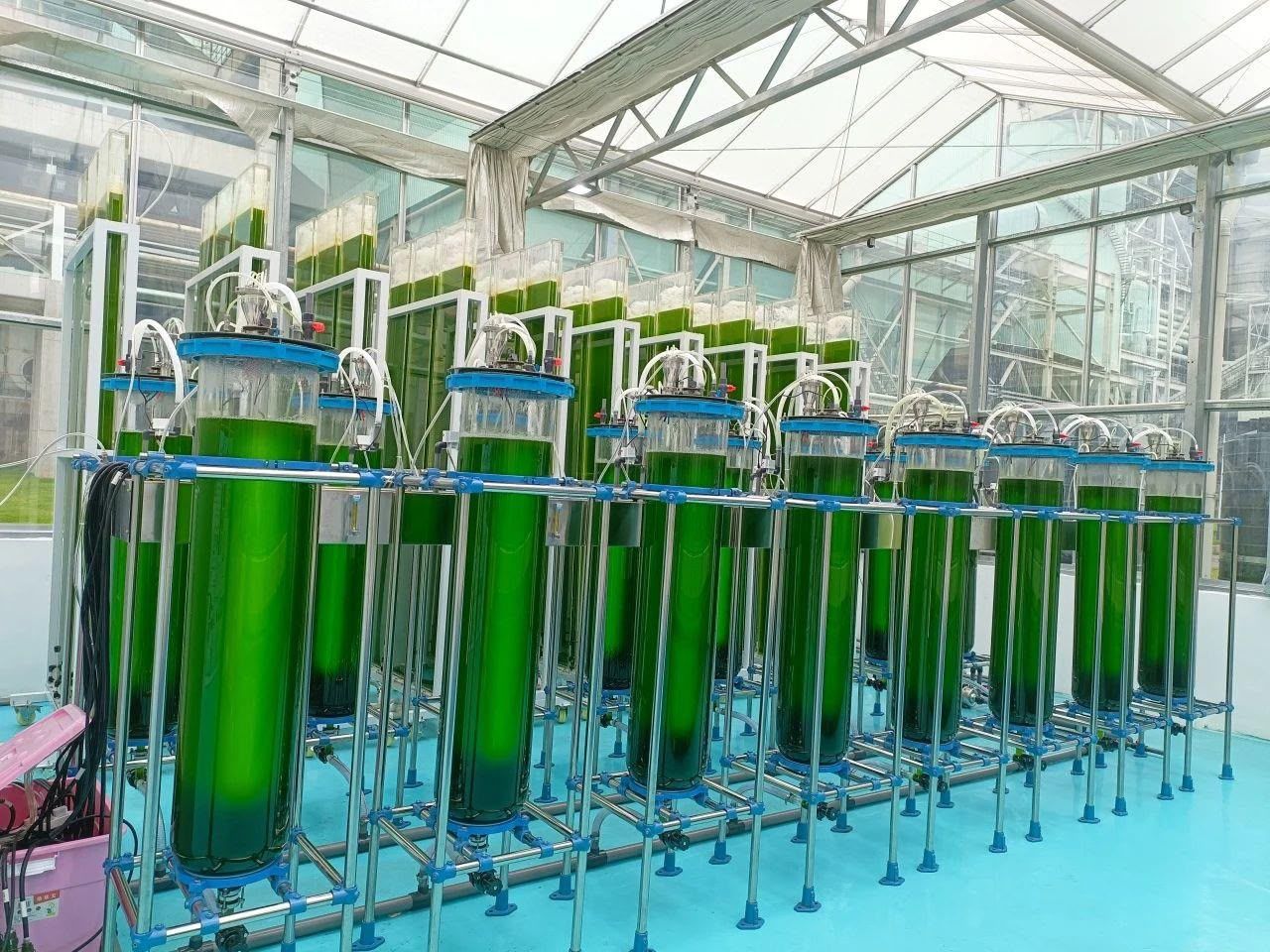
Algae & microbial systems
Living systems take up those nutrients, and CO₂, and grow.
04
Biomass & bio-based molecules
The harvest: protein, organic matter and useful compounds.
05
Products
Fertilizer, feeds, algae biomass today, with more in development.
06
Resource recovery
What's left over and what returns from the field re-enters the loop as feedstock.
Text equivalent
- Organic waste
- Biological processing
- Algae & microbial systems
- Biomass & bio-based molecules
- Products
- Resource recovery
Recovered nutrients re-enter the cycle as feedstock.
- Organic waste from markets and farms is processed biologically instead of being dumped or burned.
- The nutrients it releases feed algae and microbial systems.
- Those systems produce biomass, the raw material for fertilizer and feed.
- Fertilizer returns nutrients to farms, and feed goes to fish and livestock.
- What remains, and the waste those farms produce, comes back into the loop.
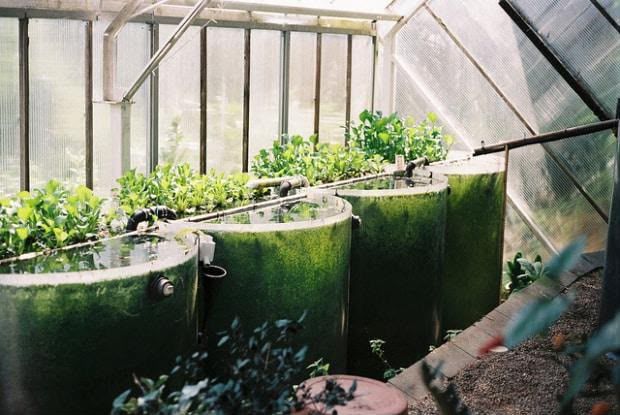
Aquaponics works the same way on a small scale: fish waste feeds plants, plants clean the water, and the water returns to the fish.
Why it matters in East Africa
Much of East Africa's economy already runs on biology: farming, fisheries, forestry and food processing. That means large volumes of biological material and residues, and large potential value if they can be recovered rather than lost. It also means that locally made bio-based products, such as fertilizer and feed, can reduce dependence on inputs that travel long distances.
A circular bioeconomy can also create skilled jobs in collection, processing, laboratory work and engineering, close to where the resources are.
What it isn't
Not everything labelled "bio" is circular or sustainable. Burning biomass without replanting, growing crops on cleared forest, or making "biodegradable" products that only break down in industrial facilities can all miss the point. A circular bioeconomy asks harder questions: where does the resource come from, where does it go after use, and what is lost along the way?
The bottom line
A circular bioeconomy is less about any single technology and more about a design principle: biological resources are too valuable to waste. The companies, farms and cities that build around that principle will be ready for a future with tighter resources and greater demand.